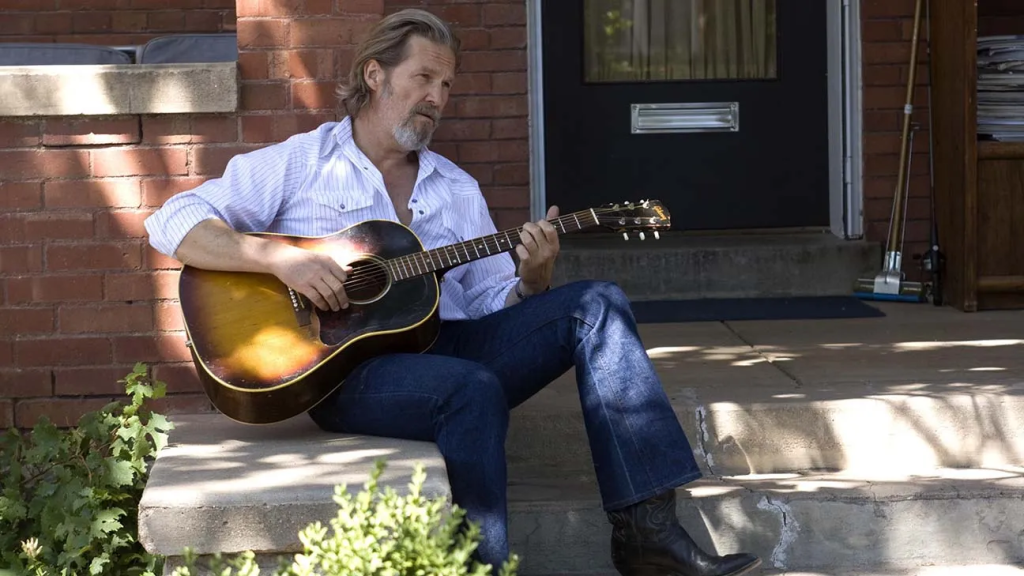
Fame is both a lauded ideal and a washable facade. One minute you’re at the center of American pop culture, the next you’re a signed autograph resting in the attic. Rarely does it last a lifetime, and when the next big thing comes around, you’re a forgotten relic. Crazy Heart understands this dichotomy. Otis “Bad” Blake has touched success, but remains vulnerable to being forgotten.
Nowhere is this washable facade more apparent than in the film’s opening, where Bad’s cultural legacy is slowly fading. Once a renowned country star, Bad finds his latest gig to be at a bowling alley. The owner greets him with genuine reverence, explaining that he’s been listening to Bad for a long time and is proud to have him in the establishment. When Bad sits at the bar, however, the young bartender doesn’t bat an eye. They refuse him a bar tab because, to them, he’s just not worth the money. In that single interaction, his legacy is reduced from a stadium-filling country icon to a financial liability. Even the owner who idolized him ultimately treats him as just another weekend booking. Rather than throwing a fit, storming out, or proclaiming his relevance, Bad lets it go. He swallows the indignity, knowing his legacy is merely an artifact now.
This indignity is representative of American stardom: culture’s desire to remember the song, but forget the artist. Bad’s relationship with the chart-topping Tommy Sweet is indicative of artistic perseverance. Sweet is the latest musical craze; he’s selling out arenas and records, acting as a walking eclipse over Bad. The mutual admiration and respect are apparent, and though their interactions feel like those of business rivals, years of companionship persist. Tommy remembers Bad not as a faded country act, but as a legendary songwriter. Tommy offers to work as partners on a label-ordered album; however, Bad declines. Tommy’s disappointment is engulfed by an unspoken guilt. As Bad Blake’s former protégé, Tommy finds his success is not admired by his mentor, but reluctantly understood. Bad sees himself in Tommy, but even more so, he sees the ghost of his career.
Songwriting is what gave Blake a name. On his own, he writes a song called “The Weary Kind.” The number is clearly written from the depths of his self-destruction. Though weary himself, Bad writes the song for Tommy, knowing he can carry its emotional weight. By selling the song to him, he not only offers himself financial freedom, but career fulfillment. Blake is not the outlaw hero he once was, but to someone like Tommy, he is. That artistic leadership is what preserves musical history, and though his time is up, another is fit for the American limelight.
Public recognition may wash away, though the art can never die. The American celebrity is one who has risen above and created something extraordinary, crowned by the masses as a beacon of will. We recognize their talent when it becomes important in our lives, and let go of it the second another taps in. Otis “Bad” Blake is what comes of that importance. Though he is merely a memory to many, the music remains immortal.